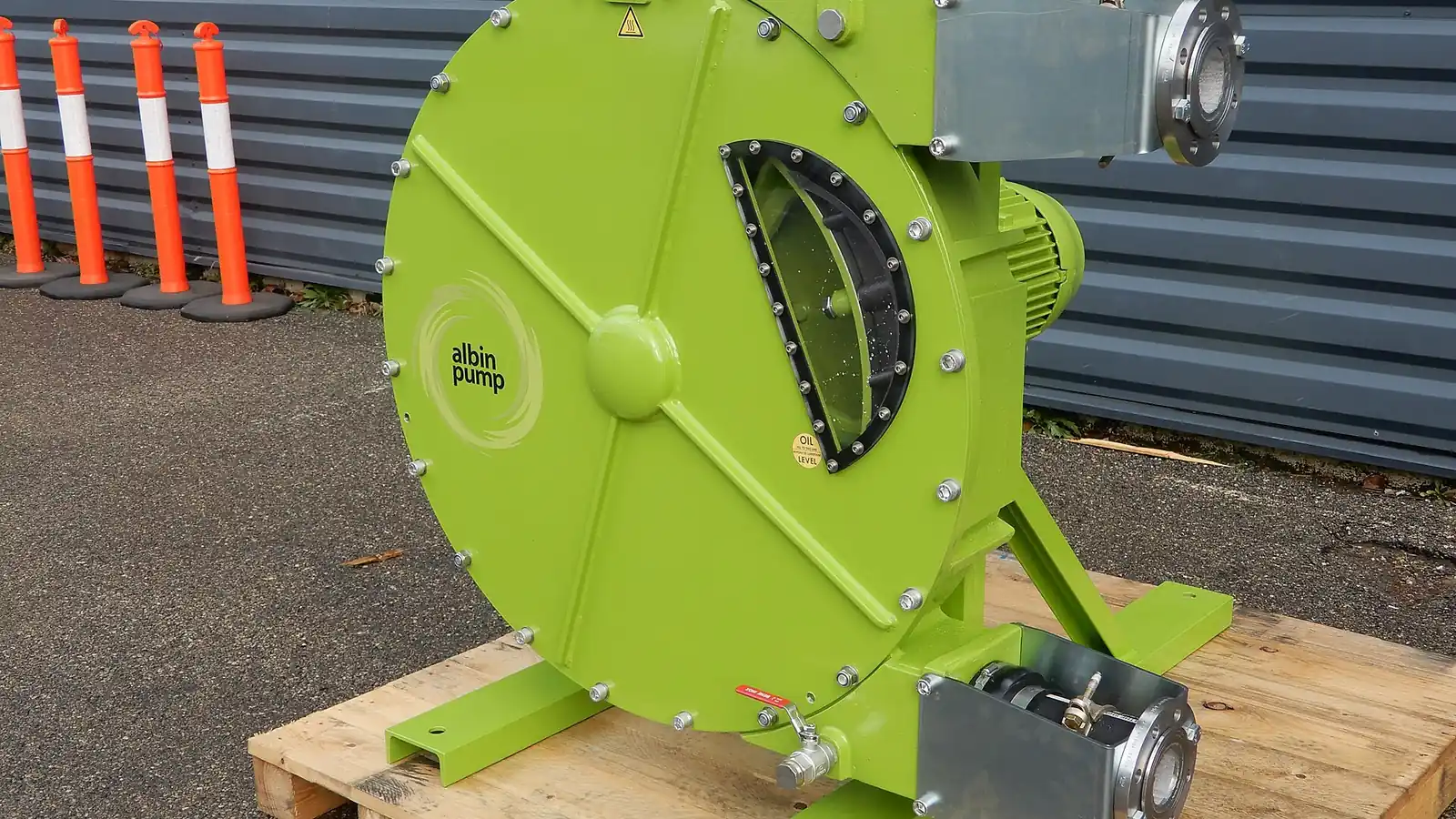
Water and wastewater plants are peristaltic pump territory. Not because the pumps are exotic — quite the opposite. Peristaltic pumps are favored precisely because they are simple, dry-run capable and handle the three jobs that break other pumps: dosing aggressive chemicals, sampling dirty water, and transferring viscous sludge.
Chemical Dosing: The Core Duty
Coagulants, flocculants, pH control agents, sodium hypochlorite, polymers — dosing pumps must be accurate, chemical-resistant and able to run against back pressure. Peristaltic pumps score on all three:
- Accuracy: flow is proportional to speed, so a 0.1–600 rpm drive gives precise, repeatable dosing with ±1% repeatability on a YZ15 head.
- Chemical resistance: the fluid touches only the tube — choose silicone, EPDM or PTFE-lined tubing to match the chemical.
- Dry-run safe: a dosing pump that runs out of chemical does not destroy itself, unlike gear or diaphragm pumps that need liquid for lubrication.
Sampling: Clean, Representative Samples
Autosamplers and online analyzers need to draw representative samples without contaminating them or the line. A peristaltic pump with a fresh tube section gives a clean sample path every cycle — and because the tube is disposable, cross-contamination between sample points is eliminated.
Sludge and Polymer Transfer
Thick sludge, polymer gels and filter press feed are too viscous and abrasive for most pumps. Peristaltic pumps handle them by rolling the fluid along in the tube — no valves to clog, no impellers to wear. For high-viscosity transfer, a YZ35-style head with 73#/82# tubing moves up to 12,000 ml/min.
Sizing Guide for Water Duty
| Duty | Head family | Typical tubing | Flow range |
|---|---|---|---|
| Chemical dosing (pH, coagulant) | YZ15 | 13#–16# | 0.007 – 492 ml/min |
| Polymer/flocculant | YZ15 / YZ25 | 19#–25# | up to 1,020 ml/min |
| Sampling | YZ15 multi-channel | 13#–14# | 0.007 – 162 ml/min |
| Sludge / filter press feed | YZ35 | 73#–82# | up to 12,000 ml/min |
FAQ
Can a peristaltic dosing pump handle sodium hypochlorite?
Yes — with the right tubing. Hypochlorite oxidizes many elastomers, so EPDM or a dedicated hypochlorite-grade tube is recommended. Confirm compatibility before committing.
Do peristaltic pumps need check valves for dosing?
For anti-siphon protection and to hold prime at the injection point, a simple foot valve or check valve on the suction side is common. The pump itself does not need valves to meter.
What maintenance does a water-treatment peristaltic pump need?
Basically one job: replace the tube on schedule (every 300–2,000 hours depending on duty) and keep the head clean. See our 8-step replacement SOP for the full procedure.