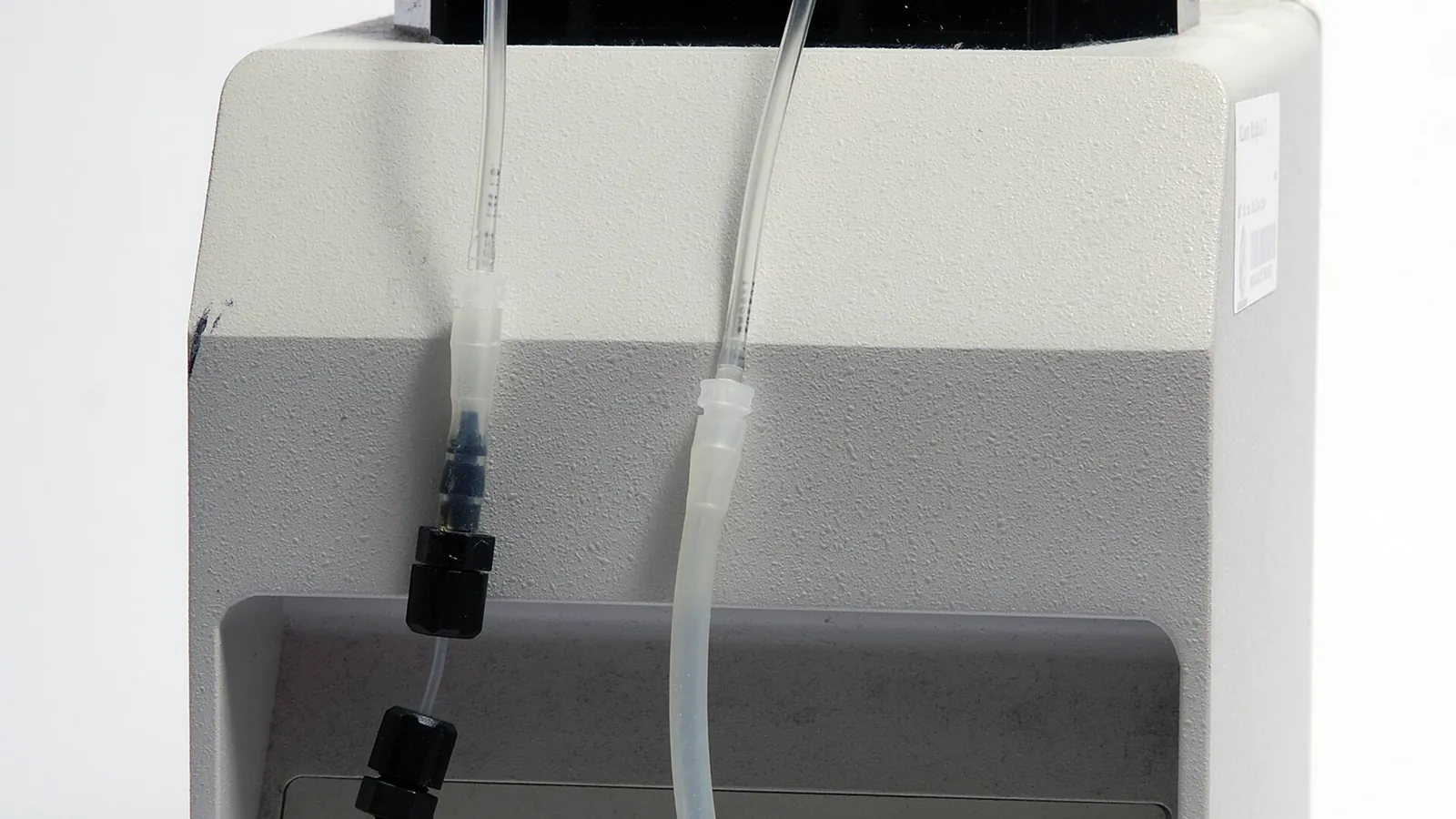
Walk through any biology, chemistry or pharmaceutical lab and you will find peristaltic pumps — not because they are the cheapest option, but because they are the only pump that can move a fluid without the fluid ever touching the pump mechanism. The tube is the pump, and the tube is disposable. For labs, that is the whole point: zero cross-contamination between runs, no seals to fail, no rotor to clean.
Where Peristaltic Pumps Earn Their Place in the Lab
- Cell culture and media transfer. Gentle pumping that does not shear cells — peristaltic action is low-shear by design, unlike gear or centrifugal pumps.
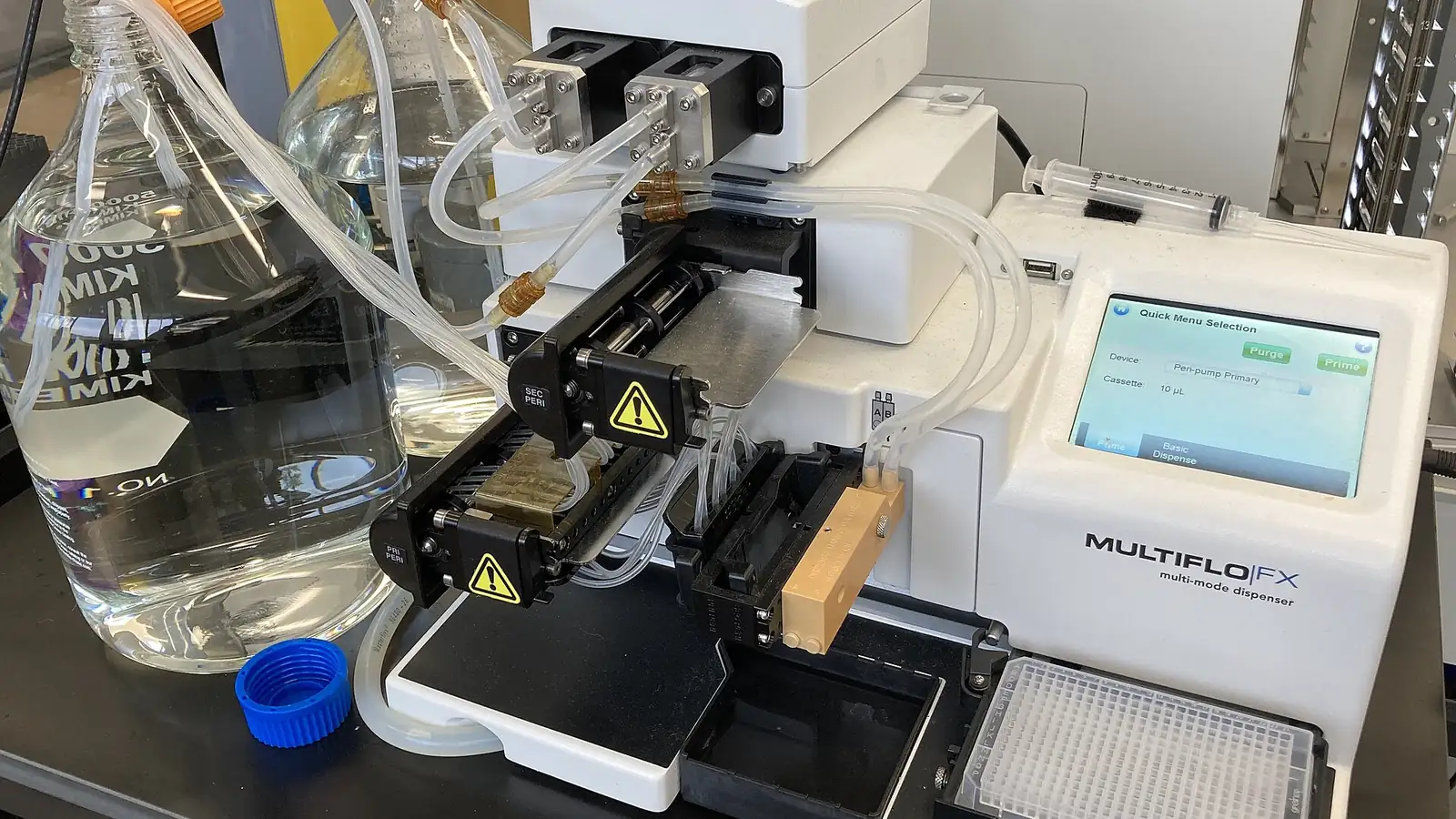
- Dispensing and filling. Multi-channel heads deliver matched volumes to several vials or wells at once, with accuracy around ±1%.
- Chromatography and filtration. Steady, pulsing-minimized flow keeps column packing stable and pressure profiles reproducible.
- Sampling and dosing. Small-bore tubing (13#–14#) meters microliter to milliliter volumes on demand.
- Bioreactor feed. Slow, continuous addition of nutrients or pH control agents over hours or days.
Specs That Matter for Lab Duty
| Spec | Why it matters | Typical lab requirement |
|---|---|---|
| Flow accuracy | Dosing and filling repeatability | ±1% or better |
| Flow range | Micro-dosing to media transfer | 0.007 – 2,280 ml/min (YZ15 family) |
| Speed control | Reversible, stepper-driven for reproducible flow | 0.1 – 600 rpm, digital setpoint |
| Multi-channel | Parallel filling without extra drives | 2 – 6 channels |
| Tube material | Biocompatibility and extractables | Platinum-cured silicone, PTFE-lined |
Tubing Choices for the Lab
The tube is the only wetted surface, so material selection is a contamination decision. Three options cover most lab work:
- Platinum-cured silicone — the default. Low extractables, autoclavable, transparent so you can see the flow. Good for media, buffer and most aqueous solutions.
- PTFE-lined tubing — for aggressive solvents and chemicals where silicone would degrade. Combines PTFE chemical resistance with the flexibility a pump head needs.
- Peroxide-cured silicone — the economical choice for non-regulated general transfer and waste lines.
FAQ
Can a peristaltic pump be autoclaved?
The pump head and drive should not go in the autoclave — but the tubing and fittings can. That is the workflow: remove the tube, autoclave it (or replace with a sterile spare), and reinstall. This is what makes peristaltic pumps practical for sterile work.
How accurate is a lab peristaltic pump?
With a stepper drive and matched tubing, repeatability of ±1% or better is realistic. Absolute accuracy depends on calibration, tube condition and back pressure — which is why the replacement SOP matters as much as the pump spec.
What flow range should I buy for a general lab pump?
A YZ15-style head on a 0.1–600 rpm drive covers roughly 0.007 to 2,280 ml/min depending on tube size — enough for micro-dosing and media transfer alike. Keep a spare drive only if you routinely need two flows at once.