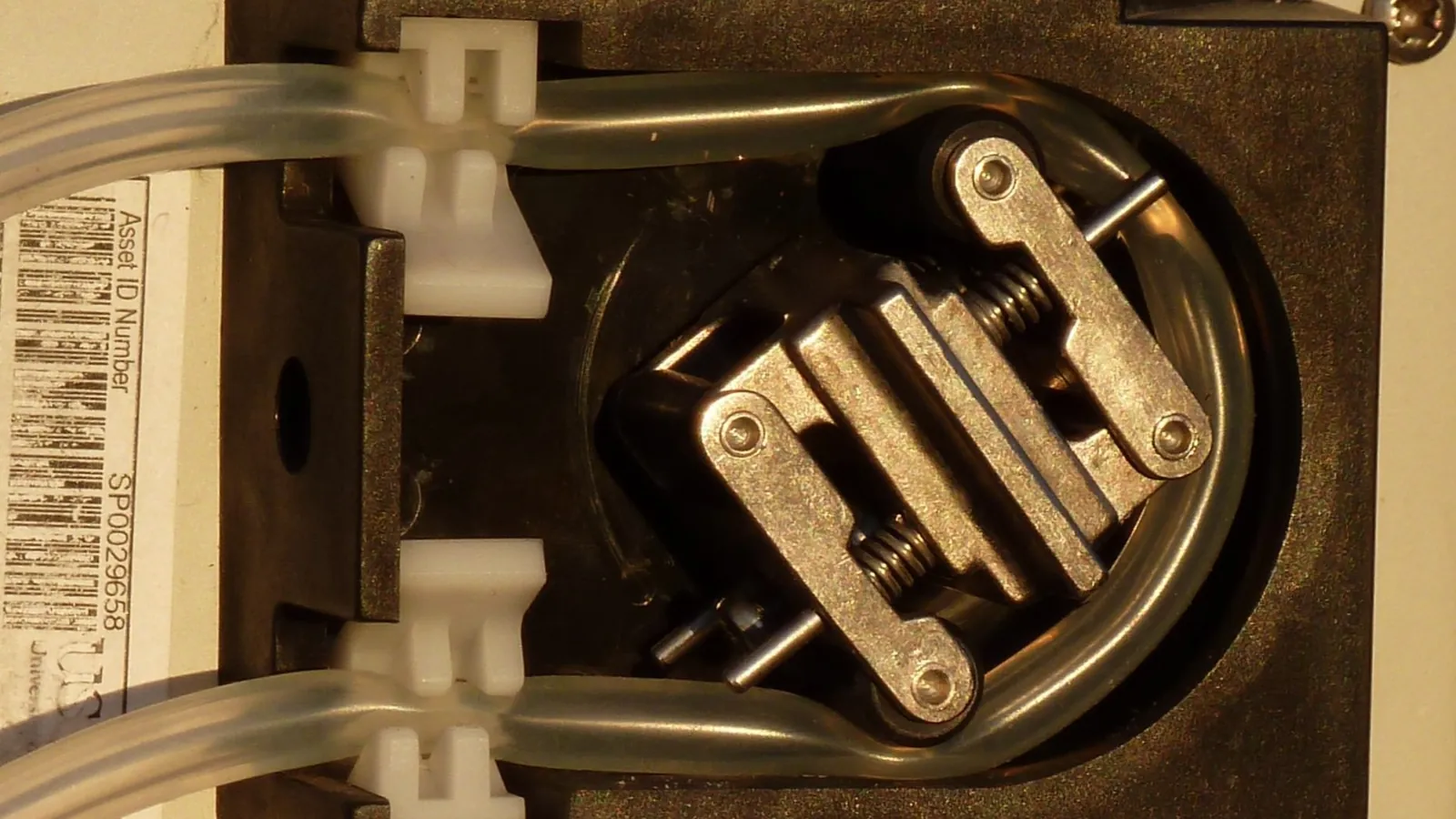
Buying a peristaltic pump looks simple — pick a pump, pick a tube, done. Then the flow is wrong, the tube fails in a week, or the drive stalls on your viscous fluid. The difference between a pump that works and a pump that frustrates is decided by six specs, and most of them are decided before you look at any price list.
1. Flow Rate: Work Backwards from Your Process
Define the flow in ml/min at your operating speed — not the pump's maximum. Peristaltic flow is proportional to speed, so a 600 rpm head covers a wide band: a YZ15 head with 13# tubing delivers 0.007–42 ml/min, while the same head with 18# tubing reaches 2,280 ml/min. The tube size is your flow range selector; the drive is your fine adjustment.
2. Pressure: Know Your Back Pressure
Peristaltic pumps are low-pressure machines: typically 1–2 bar continuous (up to ~3 bar with reinforced tubing). The tube is the pressure boundary — higher pressure shortens tube life and reduces accuracy. If your process needs more than about 5–7 bar, a peristaltic pump is the wrong technology.
3. Speed Range and Control
A 0.1–600 rpm stepper drive gives 6,000:1 turndown — enough for both micro-dosing and fast transfer on one pump. For dosing accuracy, speed control resolution and drift matter more than top speed. If you need ±1% repeatability, buy a stepper drive, not a DC motor.
4. Tubing: The Only Wetted Part
The tube decides chemical compatibility, accuracy, life and running cost. Match the material to the fluid (silicone for general/food, EPDM for acids and hypochlorite, PTFE-lined for solvents, Viton for oils) and the size to the flow. Our tubing guide has the full chart.
5. Accuracy: What Repeatability Do You Actually Need?
Peristaltic pumps are repeatable but not inherently precise: expect ±1–3% repeatability with a good drive and fresh tube, and calibrate for absolute accuracy. For critical dosing, keep a spare tube — accuracy degrades as the tube wears, not as the pump ages.
6. Head: Match It to the Job
| Head family | Flow | Best for |
|---|---|---|
| YZ15 | 0.007 – 2,280 ml/min | Dosing, sampling, lab, multi-channel |
| YZ25 | up to 1,740 ml/min | Medium transfer, thicker tubes |
| YZ35 | up to 12,000 ml/min | Bulk transfer, sludge, filling |
The 6-Point Checklist
- Required flow at operating speed (ml/min)
- Back pressure (bar) and fluid temperature
- Chemical compatibility (tube material)
- Accuracy / repeatability requirement
- Duty cycle (continuous vs intermittent, dry-run risk)
- Drive features (stepper, IP rating, speed control, reverse)
FAQ
How do I calculate the flow I need?
For dosing: dose volume per hour divided by minutes of run time gives ml/min. For transfer: batch volume divided by target transfer time. Add 20% margin for tube wear and calibration drift.
Which is better — a complete pump or a head + drive?
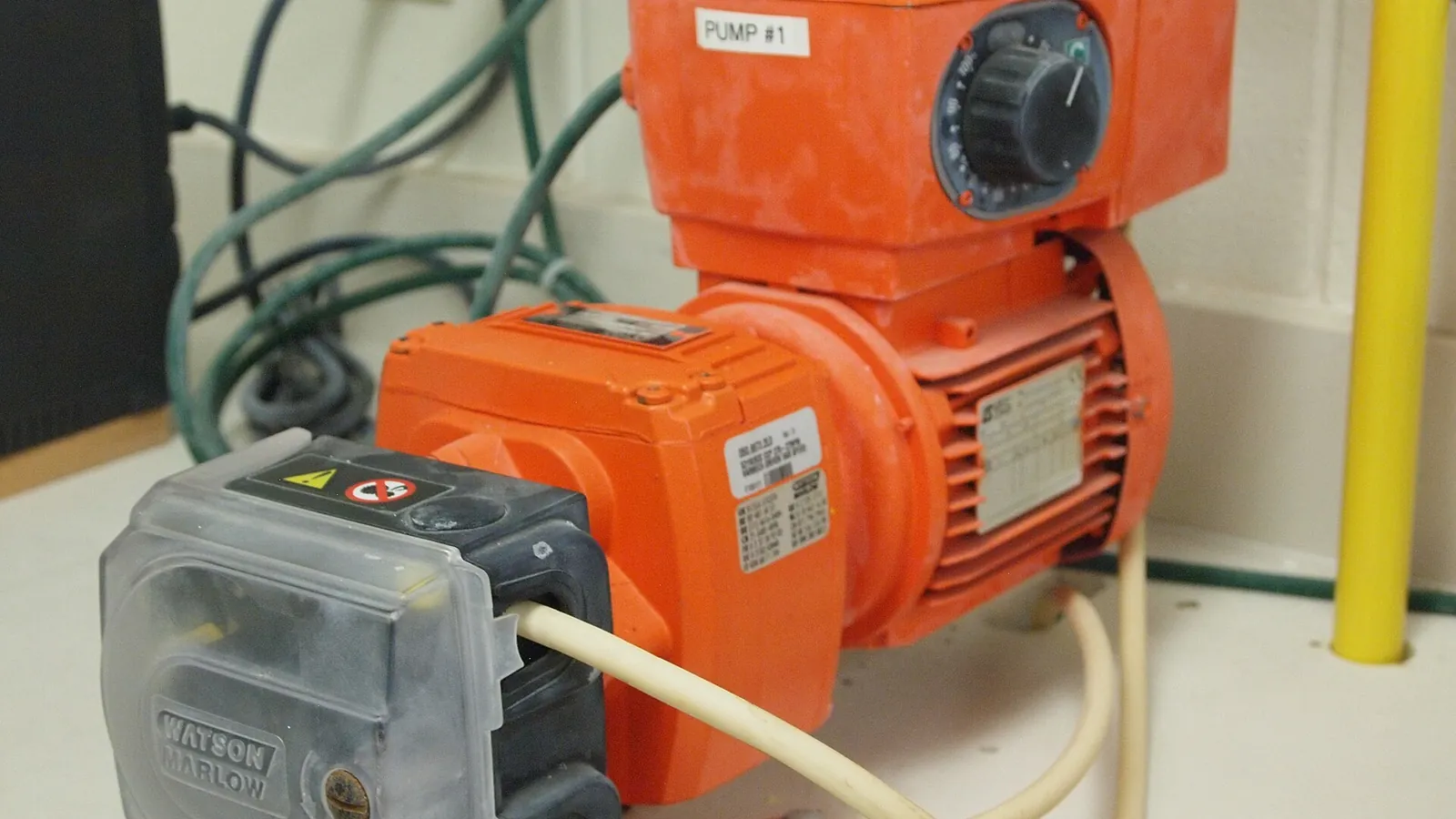
Complete pumps are pre-matched and calibrated. Head + drive is the right choice for OEM, multi-head rigs and when you already have a drive. Both ship factory-direct from PERIFLOW.
What is the real cost of ownership?
Three parts: pump price, tubing consumption (the recurring cost) and maintenance labor. A cheaper pump with expensive tubes and short life costs more in year two — compare the tube price per hour of life, not the sticker price.